How a veteran development engineer found his most meaningful work in rural Ethiopia
For a development professional whose 45-year career has taken him to more than 45 countries, one sight remains especially memorable: the joy on families’ faces as they collect clean water just steps from their homes, relieved of a daily burden that once consumed hours of their time. For Neil Chadder, a Chartered Civil Engineer and COWASH IV’s Chief Technical Advisor, moments like these are a powerful reminder of why the work matters. “COWASH is a project for the heart,” he says.
Across his career, Neil has contributed to projects of every scale, from major infrastructure programmes to internationally funded development initiatives. Yet COWASH stands out for a remarkably simple reason: he gets to see the difference. Unlike many development projects where professionals take part in different stages of a project cycle but rarely witness the final outcome, COWASH gives Neil the opportunity to see lives changing while the work is still underway.
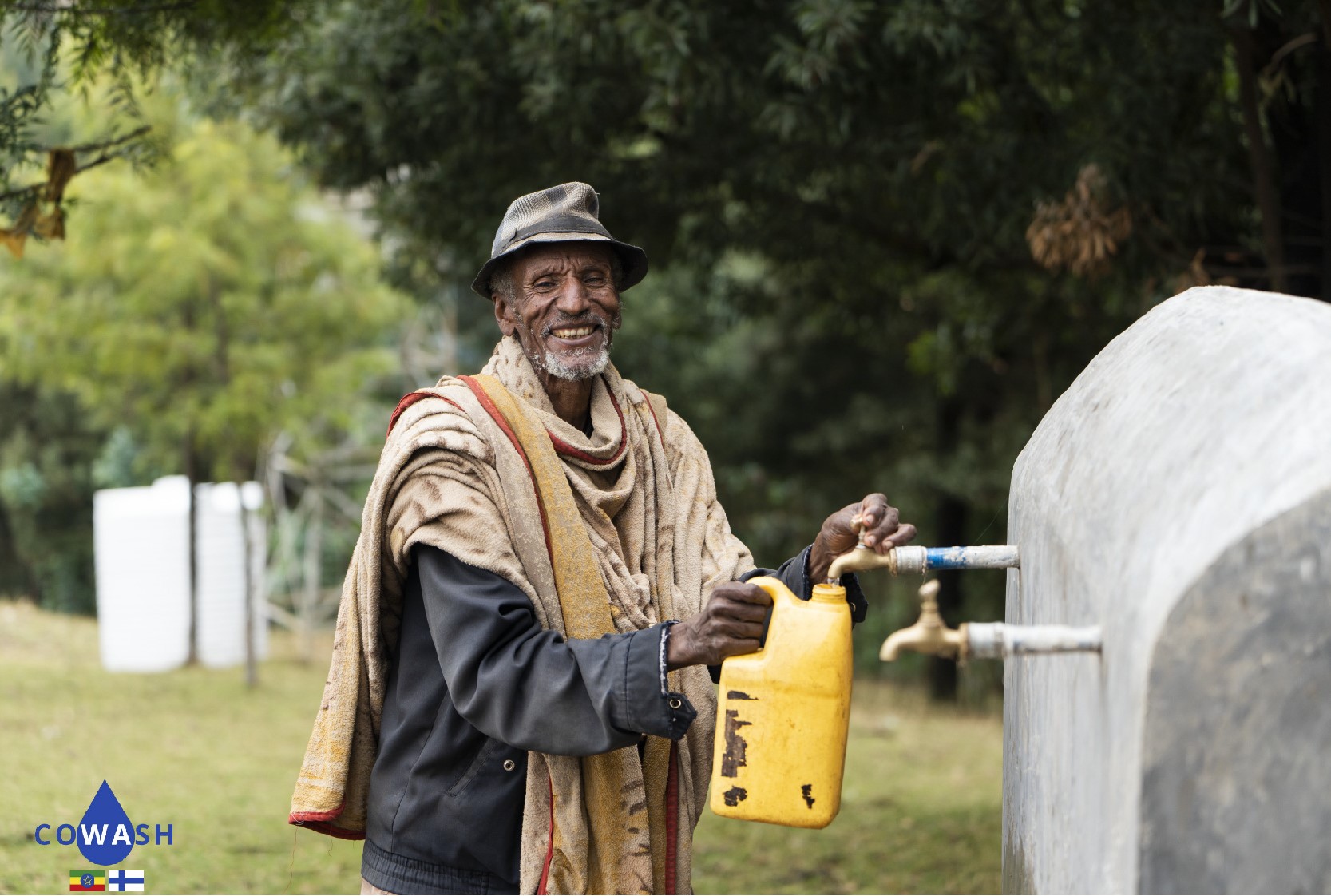 Neil recalls returning to communities just months after project interventions were initiated and seeing the transformation firsthand. Families who once struggled to access safe water were now collecting it close to their homes. Children no longer needed to travel hours fetching water, while households benefited from healthier living conditions and improved sanitation services.
For many rural communities, that change means something as simple, yet significant, as children having more time to attend school, women having more time to play a more active role in their communities and greater peace of mind for parents knowing their children no longer have to take long, dangerous roads to fetch water. For Neil, transformations like these have turned COWASH from a professional assignment into something deeply personal, making it one of the most meaningful projects of his career.
Simple Solutions, Life-changing Results
For Neil, COWASH represents development in its most fundamental form: helping people meet basic needs through simple interventions and facilitation. “It changes the lives of many people in the most fundamental way,” he says. Few projects, he believes, allow professionals to witness such immediate and tangible changes in people’s lives.
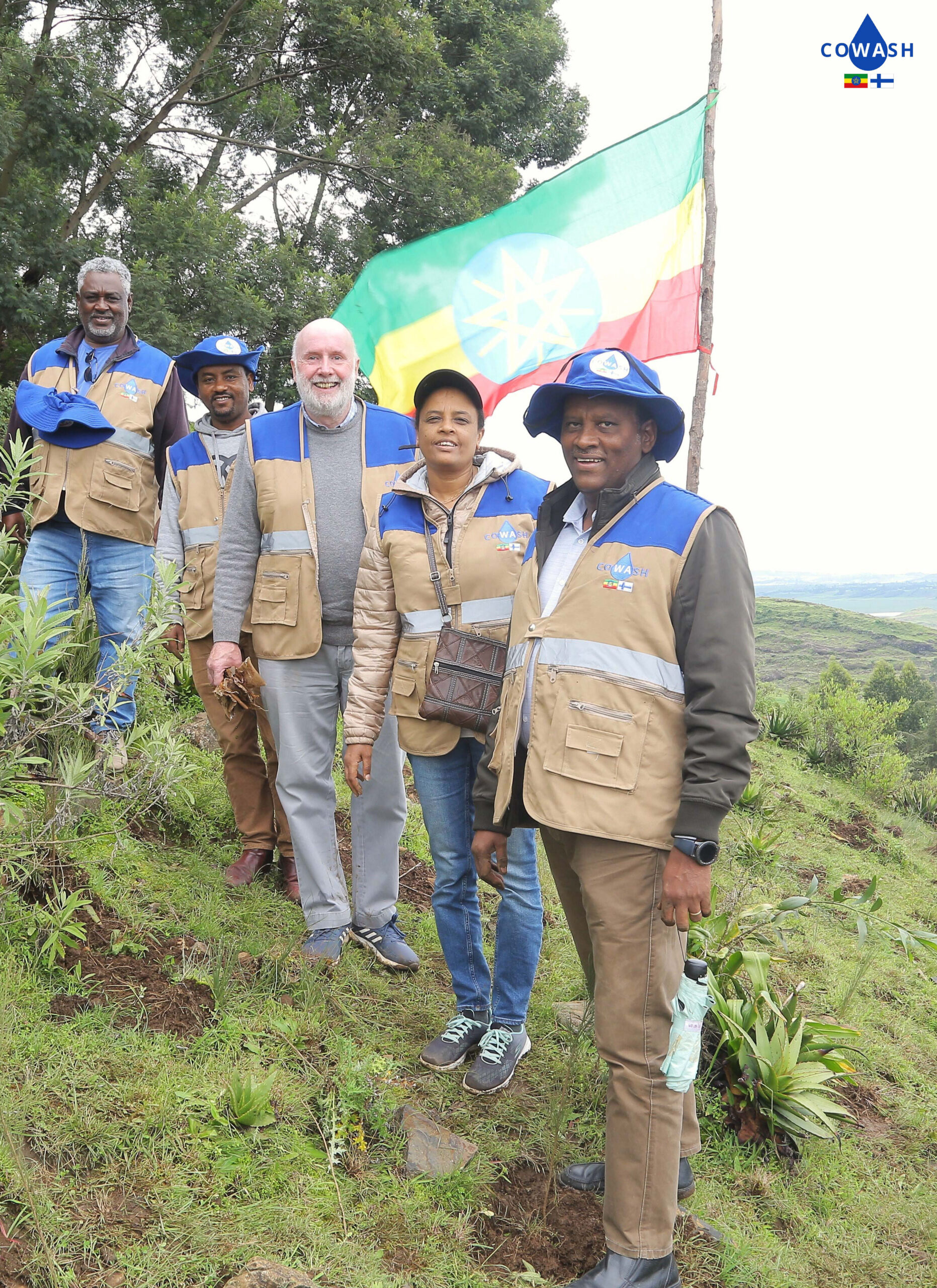 While the results may appear straightforward, delivering them is anything but simple. Operating across multiple regions and administrative levels, COWASH brings together communities, woreda administrations, regional governments, federal institutions and international partners. Neil describes this broad network of stakeholders as both one of the project’s greatest strengths and one of its biggest challenges.
He sees the bilateral nature of COWASH as one of its defining strengths, fostering genuine collaboration between Ethiopia and Finland rather than imposing solutions from outside. At the same time, coordinating such a large and geographically dispersed network of stakeholders around a shared objective comes with significant challenges. Over the years, the project has also had to navigate challenges including the COVID-19 pandemic and other disease outbreaks, security concerns, logistical constraints and changing regional contexts. Yet throughout these difficulties, Neil has remained guided by a strong sense of responsibility. “The price of failure is far too high. I can’t bear the thought that if we failed to do our job, even one child wouldn’t get water.” That sense of responsibility has shaped his approach to leadership.
Never Settling for the Target
When Neil assumed leadership of the project, its ambitious targets carried enormous responsibility. Looking back, he admits that the possibility of failing to achieve them weighed heavily on him. “I was petrified in the early days when I took over. The target was high,” says Neil. Today, COWASH has surpassed its original beneficiary target of 1.1 million, providing access to improved water supply to more than 1.3 million people.
While he acknowledges the significance of these achievements, he believes success should never lead to complacency. “We have the opportunity to do more, and we should challenge ourselves to do more,’’ he says. For him, the motivation has never been hitting targets or receiving recognition but the pure joy of seeing the difference the project makes in villages and the smiles on people’s faces.
Impact that Will Be Measured Over Generations
 When asked about the programme’s impact, Neil prefers to think beyond what can be measured today. For him, the true impact of COWASH may only become fully visible years into the future. He imagines a child who now attends school because clean water is available nearby. Decades from now, that child could become a scientist, a teacher, an entrepreneur or a national leader. “One child who is now going to school could be the child who discovers the cure for cancer,’’ he says. “Another could grow up to be a great statesman.” For him, what matters most is knowing that the project has contributed to a larger effort to improve lives and support Ethiopia’s development.
Looking to the Future
Neil believes COWASH’s Community-Managed Project (CMP) approach and the broader project model offer a sustainable solution to Ethiopia’s rural water, sanitation and hygiene challenges. Through this approach, solutions are developed with communities rather than simply delivered to them. By involving communities in planning, implementation and management, CMP places ownership of WASH services in the hands of communities, helping ensure their sustainability. For Neil, fully realising this potential means seeing the approach integrated into government systems and operations, allowing it to be sustained and expanded beyond the project itself. He says the potential is unlimited. If scaled further, he sees Ethiopia becoming an international example of how rural water, sanitation and hygiene challenges can be addressed effectively through community ownership and strong institutional collaboration.
 A Privilege and a Fitting Final Chapter
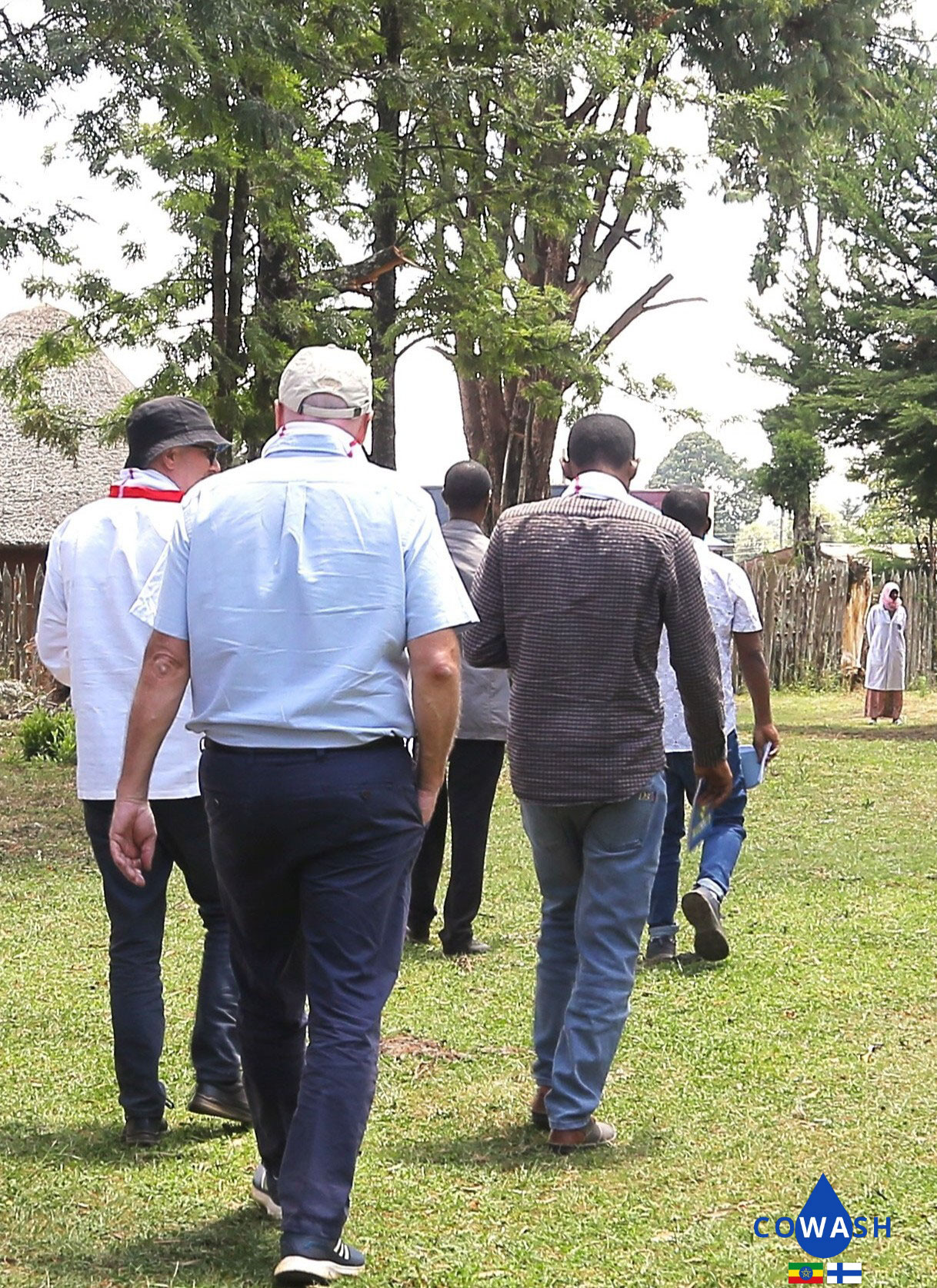
Neil’s work in Ethiopia dates back to 1989, when he worked on the Addis Ababa Water Supply Project followed by his role as project manager and water supply engineer for a water supply and sanitation study covering 12 towns in the 1990s. Decades later, his work with COWASH IV has given him another opportunity to contribute to Ethiopia’s development. Neil regards his five years with the project as a privilege, made all the more meaningful by the opportunity to experience Ethiopia’s beautiful landscapes and communities. Reflecting on a career spanning nearly half a century, he adds with a smile: “It is a great project to end my career on.”